
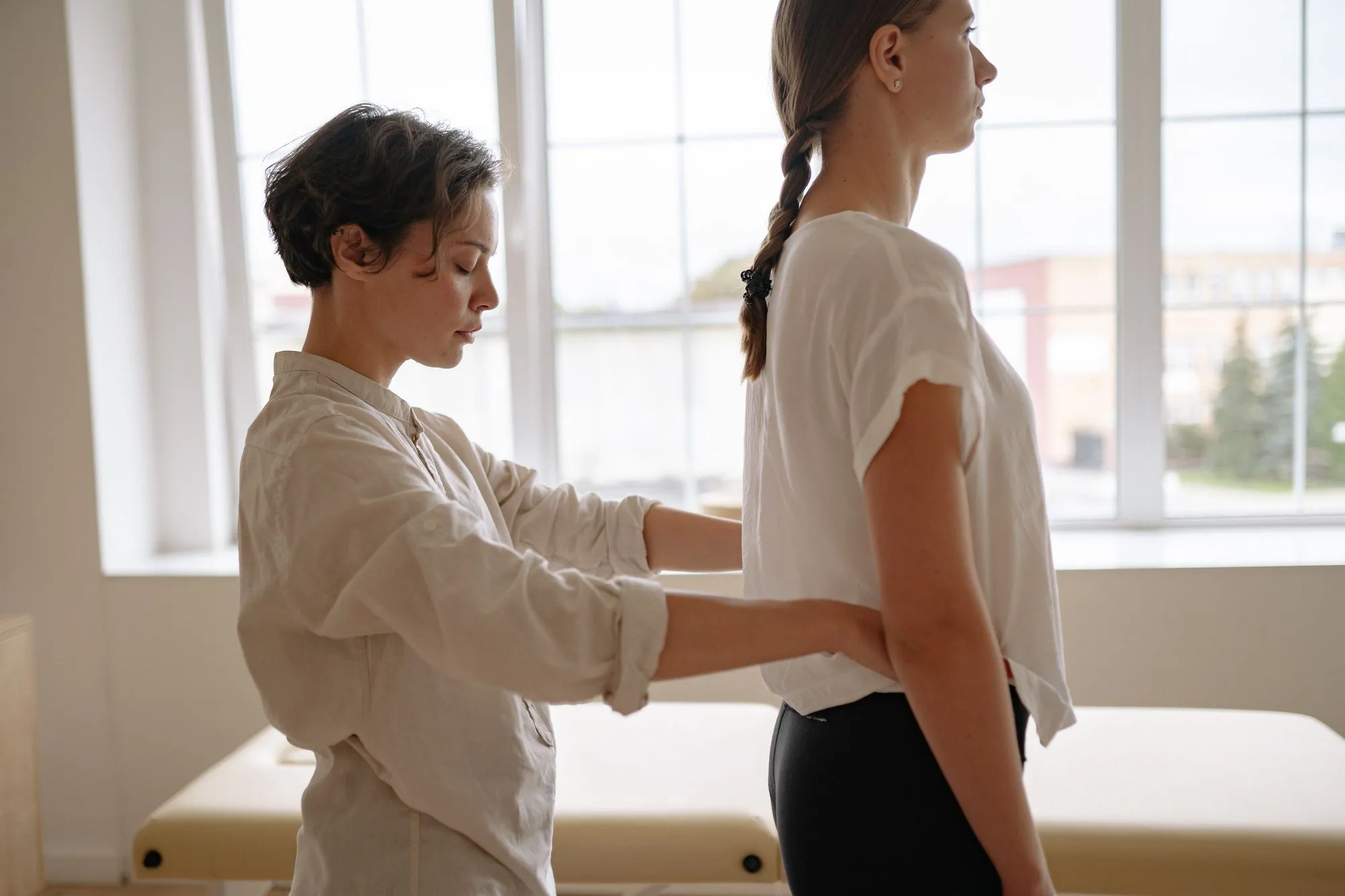
What Is Pelvic Floor Physiotherapy?
Your pelvic floor is a group of muscles that sits like a hammock across the bottom of your pelvis. These muscles support your bladder and bowel, and the uterus in women. They help you control urine, stool and gas, and they play a part in sexual function and core stability.
When these muscles are weak, too tight or not working well together, you may notice leaks, pressure, pain, or trouble emptying your bladder or bowel. These problems are common, but they are not just something you have to live with.
Pelvic floor physiotherapy assesses and treats these muscles and the areas around them. Care may include education, breathing and relaxation, pelvic floor muscle training, exercise, bladder habit advice and hands-on treatment. Research supports supervised pelvic floor muscle training as a first-line treatment for bladder leaks in women.
Conditions We Help With
Pelvic floor concerns can happen at any age and stage of life. Here are some of the concerns pelvic floor physiotherapy can help with.
Bladder Leaks and Incontinence
Leaking when you cough, sneeze, laugh, lift or exercise is called stress incontinence. A sudden, strong urge that is hard to hold is called urge incontinence, and some people have both. Pelvic floor muscle training guided by a physiotherapist can help many people improve bladder control.
- Leaks with coughing, sneezing, running or lifting
- Urgency and rushing to the bathroom
- Needing to pee often, day or night
- Trouble controlling gas or stool
Pregnancy and Postpartum Recovery
Pregnancy and birth place real demands on your pelvic floor, abdominal muscles and back. Physiotherapy can help you stay active during pregnancy and rebuild strength after birth, whether you had a vaginal birth or a caesarean section.
- Pelvic girdle and low back pain during pregnancy
- Leaks, heaviness or pressure after birth
- Separation of the abdominal muscles (diastasis recti)
- A gradual, guided return to exercise
Pelvic Pain
Pelvic pain can be felt in the lower belly, hips, groin, tailbone or genitals, and it may come and go. Sometimes the pelvic floor muscles are holding too much tension rather than being weak. Treatment may focus on relaxation, breathing, gentle stretching and gradual strengthening, at a pace that feels right for you.
- Pain during sex or when using tampons
- Tailbone (coccyx) pain
- Pain with sitting
- Pelvic pain that continues after your doctor has checked for other causes
Men's Pelvic Health
Pelvic floor physiotherapy is not only for women. Men can also have bladder leaks, urgency or pelvic pain, and leaks are common after prostate surgery. Physiotherapy can teach you how to find, strengthen and relax these muscles, including before and after prostate surgery.
- Leaks after prostate surgery
- Dribbling after passing urine
- Urgency or needing to go often
- Pain in the pelvis, groin or between the legs, or pain with sitting
What Happens at Your First Visit
Your first visit starts with a conversation. Your physiotherapist asks about your symptoms, bladder and bowel habits, any pregnancies or surgeries, and what you want to get back to. You only share what you are comfortable sharing.
Next comes an assessment, which may look at your posture, breathing, back and hip movement, and abdominal muscles. Your physiotherapist then explains what they found in plain language and builds a treatment plan with you.
An internal examination can help show how the pelvic floor muscles tighten and relax. It is only offered if it is appropriate for you, and it is always explained first. You can say no, ask questions or withdraw your consent at any time, and you never need an internal exam to start care. There are other ways to assess and treat the pelvic floor.
Wear comfortable clothing, and feel free to write down your questions before you come.
Your Comfort and Consent
Pelvic health care is personal. Your physiotherapist will explain each step before it happens, check in with you as you go, and respect your choices. Consent is ongoing, which means you can change your mind at any time, even partway through an exam.
In Alberta, pelvic health internal examinations are a restricted activity. A physiotherapist must complete extra training and receive authorization from Physiotherapy Alberta (the College of Physiotherapists of Alberta) before performing them. You can check any physiotherapist’s authorizations with the College’s “Verify a Physiotherapist” search.
If you have experienced trauma, or an internal exam does not feel right for you, you can tell us as much or as little as you like. Your care can be planned without one.
When to See a Doctor First
Pelvic floor physiotherapy is safe for most people, and it can work alongside care from your doctor. Some symptoms need a medical check first. See your family doctor or an urgent care centre if you notice any of the signs below. Go to the emergency department right away if you have sudden new bladder or bowel leaks with numbness in the groin or inner thighs, or new weakness in your legs.
- Blood in your urine or stool
- Fever or chills with pelvic pain
- Burning or pain when you pee
- Being unable to pass urine
- Unexpected vaginal bleeding, including any bleeding after menopause
- Severe pelvic or belly pain, or bleeding, during pregnancy
Pelvic Health Physio in NW Calgary
Healers also offers pelvic floor physiotherapy at our NW Calgary clinic at 176 Ambleside Cres NW. It’s a private clinic where every visit is one-on-one and by appointment.
Many people find a quiet, one-on-one setting makes it easier to talk about personal symptoms. The same care applies: everything is explained first, and nothing happens without your consent.
Sources
- Physiotherapy Alberta – College of Physiotherapists of Alberta: What patients need to know about restricted activities
- Physiotherapy Alberta – College of Physiotherapists of Alberta: Update regarding pelvic health internal examinations
- Dumoulin C, Cacciari LP, Hay-Smith EJC. Pelvic floor muscle training versus no treatment, or inactive control treatments, for urinary incontinence in women. Cochrane Database of Systematic Reviews, 2018
Updated October 2026 by the Healers Physiotherapy team. This page is general information, not a diagnosis; your physiotherapist will assess you before recommending treatment.

