
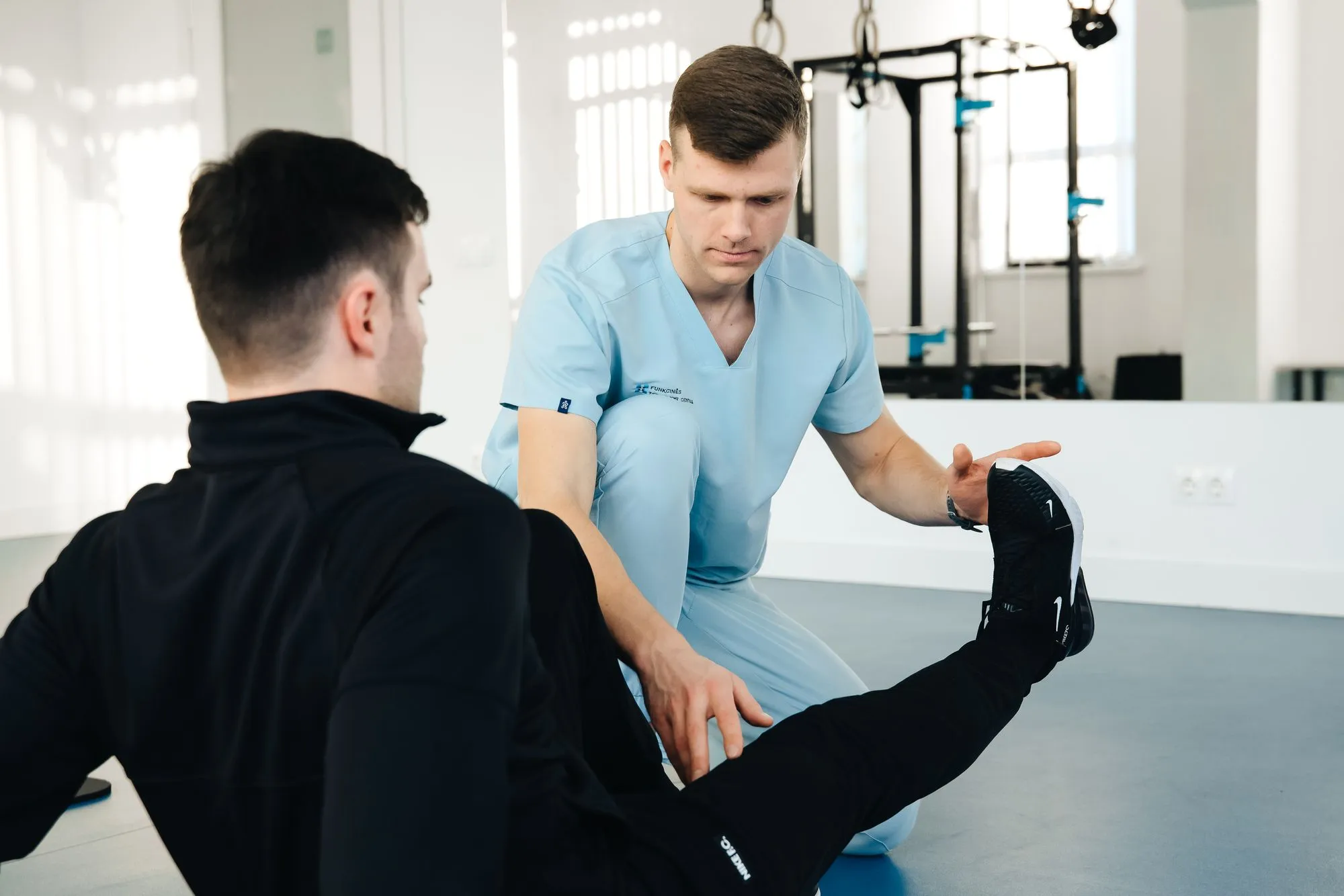
Sports Injuries We Treat
Whether you play hockey or soccer, or you run, ride or lift, injuries can happen. Your first visit starts with a full assessment of how the injury happened, how you move, and your strength, flexibility and balance. We explain what we found and agree on a plan with you.
Knee, Ankle and Shoulder Injuries
These joints take a lot of load in sport. Treatment may include hands-on joint and soft tissue work, balance and control training, and strength work that builds up in stages. If you have had, or are waiting for, surgery such as an ACL reconstruction, see our pre and post surgical rehabilitation.
- Ankle sprains and ankles that keep rolling
- Knee ligament injuries, including ACL sprains and tears
- Runner’s knee (pain around the kneecap)
- Rotator cuff and other shoulder injuries
Muscle Strains and Sprains
A strain is an injury to a muscle or tendon, like a pulled hamstring. A sprain is an injury to a ligament, the tissue that holds a joint together. In the first few days, protecting the area and easing off the activity that hurts often helps. After that, gentle movement and gradual loading are usually part of recovery, rather than long rest. We guide how much to do and when to add more.
Running and Overuse Injuries
Overuse injuries build up over time, often after a jump in training or a change in surface or footwear. Examples include shin pain, Achilles and other tendon pain, plantar fasciitis and tennis elbow. We look at your training load, movement and footwear, then adjust your plan so you can stay active where it is safe. Custom orthotics or shockwave therapy may be options for some people.
Sports Massage for Recovery
Sports massage is hands-on soft tissue work from a registered massage therapist (RMT), focused on the muscles you use most in your sport. Many people find it helps with muscle tightness and soreness, and with feeling ready for the next session.
At Healers, sports massage can be booked alongside physiotherapy. Your physiotherapist leads the rehab plan, and massage can be one part of it. Massage can feel good, but it does not replace the strength and loading work that helps injured tissue recover.
Massage over a fresh injury that is still swollen is usually not a good idea, so tell your therapist about any recent injury, health conditions or medications. Read more about massage therapy in Airdrie.
Return to Sport Plans
Getting back to sport is more than waiting a set number of weeks. Healing time matters, but your plan is based on what your body can do. We set clear checkpoints and test them before you move to the next stage.
Load management runs through every stage: we adjust how much, how hard and how often you train so the injured area can keep up. With your permission, we can talk with your coach or trainer so everyone works from the same plan. Your plan also includes injury prevention work, such as warm-ups, strength and balance training, which aims to lower your risk of getting hurt again. Concussion follows its own step-by-step return-to-sport strategy (see concussion management), and a doctor should clear you before full-contact play.
A typical plan moves through these stages:
- Settle pain and swelling, and get your full range of movement back
- Rebuild strength with progressive exercise, comparing the injured side with the other side
- Add the running, jumping, cutting, throwing or other skills your sport needs
- Return to training, then to full practice, then to games
When to See a Doctor First
Many sports injuries can be assessed directly by a physiotherapist, but some need a medical check first. See a doctor, go to urgent care or visit the emergency department if you have:
- A possible broken bone: you heard a crack, the area looks the wrong shape, or there is sharp pain right over the bone
- You can’t put weight on the leg or walk more than a few steps
- Major swelling that came on quickly after the injury
- A joint that locks and won’t straighten
- Numbness, tingling, or a hand or foot that is cold, pale or blue
- Any head injury. Anyone with a suspected concussion should leave the game and see a doctor. Call 911 for loss of consciousness, a seizure, repeated vomiting, confusion or a headache that keeps getting worse
Who Provides Sports Physiotherapy at Healers
Harman founded Healers Physiotherapy and is the lead physiotherapist at our Downtown Airdrie clinic. He is a registered physiotherapist in Alberta who earned his physiotherapy degree in 2009, practised for seven years in India and has practised in Canada since 2022. His care for orthopedic and athletic patients focuses on musculoskeletal pain in the spine, hips, knees and shoulders, using manual therapy, dry needling, exercise prescription and education to help prevent injuries. He also holds certifications in concussion management.
Anchal is a physiotherapist with more than four years of practice in Canada and over ten years before that in India. She has treated sports injuries along with musculoskeletal and neurological conditions and posture and gait problems, and has a special interest in concussion and vertigo. Meet our team.
Sports Physio in NW Calgary
Live closer to north Calgary? Our NW Calgary clinic in Ambleside offers private, one-on-one physiotherapy by appointment, including sports injury rehabilitation. Visit the NW Calgary clinic page or call 403-617-7407.
Sources
- College of Physiotherapists of Alberta: What to expect when receiving care from a physiotherapist
- NHS: Sprains and strains
- Parachute Canada: Concussion
Updated October 2026 by the Healers Physiotherapy team. This page is general information, not a diagnosis; your physiotherapist will assess you before recommending treatment.

