
Signs of a TMJ Problem
Your temporomandibular joints (TMJs) sit just in front of each ear and connect your lower jaw to your skull. You use them every time you talk, chew, yawn or swallow. Problems with these joints and the chewing muscles around them are called temporomandibular disorders (TMD), often just called “TMJ”.
Jaw clicking on its own, with no pain or locking, is common and usually does not need treatment. It is worth getting checked if you notice:
- Pain or aching in your jaw, face, temple or in front of your ear
- Clicking, popping or grating sounds that come with pain
- A jaw that catches, locks or feels stiff, especially in the morning
- Trouble opening your mouth wide, biting into food or chewing
- Tension headaches, often around your temples
- Tight neck and shoulder muscles that seem to go along with jaw pain
How Physiotherapy Helps Jaw Pain
TMD rarely has one single cause. Clenching or grinding your teeth (bruxism), stress, neck and head posture, an injury, and habits like gum chewing or nail biting can all add load to the jaw joint and chewing muscles. That is why physiotherapy looks at your jaw, neck and posture together.
Health bodies such as the U.S. National Institute of Dental and Craniofacial Research advise starting with simple, reversible treatments, and physiotherapy fits that approach. Treatment may include manual therapy for the jaw and neck, jaw and neck exercises, posture advice, and self-management strategies you can use at home.
Clicking and Locking Jaw
Clicking or catching often relates to how the small disc inside the joint moves as your mouth opens and closes. Your physiotherapist checks how your jaw opens, whether it moves evenly, and whether the muscles on one side are working harder than the other.
Treatment may include gentle joint mobilization, guided opening and closing exercises to improve control, and ways to rest a sore jaw, such as softer foods and avoiding wide yawns. The aim is smoother, more comfortable movement. Some clicking may remain, and that is often fine if it does not hurt.
Jaw Tension and Headaches
Clenching, especially at night or during stressful times, can overwork the chewing muscles. This may lead to jaw pain and tension headaches around the temples, and tight neck and upper back muscles can add to the problem.
Physiotherapy may include hands-on treatment for the jaw, head and neck muscles, posture and neck exercises, relaxation and breathing strategies, and practical habit changes. One simple habit is to keep your lips together, teeth apart and tongue resting gently on the roof of your mouth during the day. If you grind your teeth at night, we may suggest you ask your dentist whether a night guard is right for you.
What to Expect
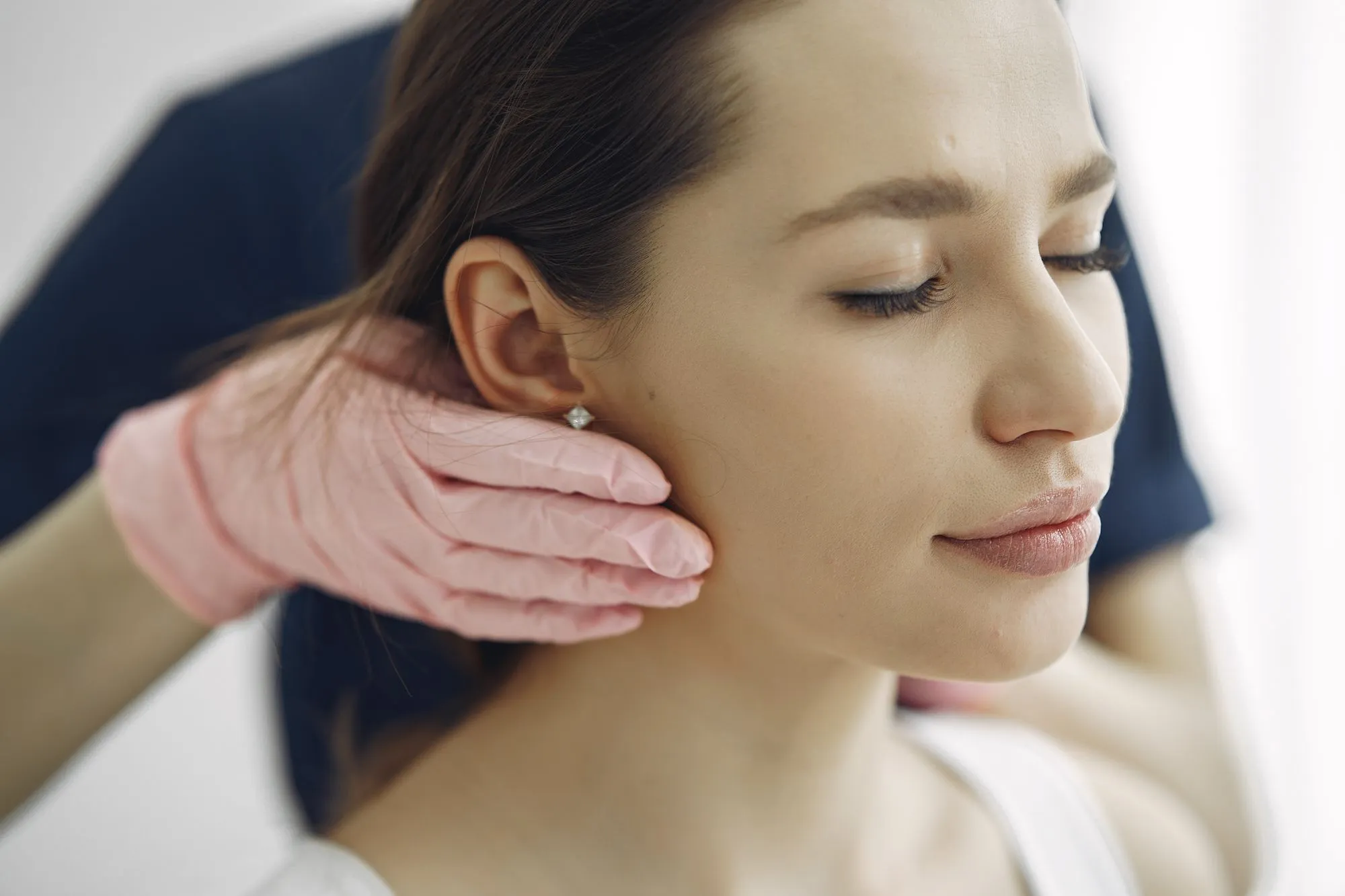
Your first visit starts with questions about your symptoms, habits, sleep, stress, and any dental or medical history. Your physiotherapist then checks how your jaw opens and moves, gently feels the jaw and neck muscles, and looks at your neck and posture.
You will leave with a clear explanation of what is likely going on and a home plan. Follow-up visits focus on hands-on treatment and progressing your exercises. Many people find their jaw pain eases as they learn to manage clenching, posture and stress, though recovery time varies from person to person.
We work alongside your dentist and doctor. With your consent, we can share what we find so your care fits together.
When to See a Dentist or Doctor First
Physiotherapy can help many kinds of jaw muscle and joint pain, but some symptoms need a dentist or doctor first. Call 911 if jaw pain comes with chest pain, shortness of breath, sweating or nausea, as these can be signs of a heart attack.
See your dentist or doctor, or get urgent care, before booking physiotherapy if you have:
- A jaw that is stuck open or locked shut and will not move (get urgent care)
- Swelling in your face or jaw, or a fever
- A recent blow to the face or jaw, or a possible broken jaw
- Numbness or tingling in your face, lips or chin
- Tooth pain, a dental infection, or pain that started after dental work
- Trouble eating or drinking, or changes in your vision
TMJ Physio in NW Calgary
Live or work in northwest Calgary? Our NW Calgary clinic offers private, one-on-one physiotherapy by appointment, including assessment and treatment for jaw pain.
Visit our NW Calgary physiotherapy page to book online, or call 403-617-7407.
Sources
- National Institute of Dental and Craniofacial Research (NIDCR): TMD (Temporomandibular Disorders)
- NHS: Temporomandibular disorder (TMD)
Updated October 2026 by the Healers Physiotherapy team. This page is general information, not a diagnosis; your physiotherapist will assess you before recommending treatment.

